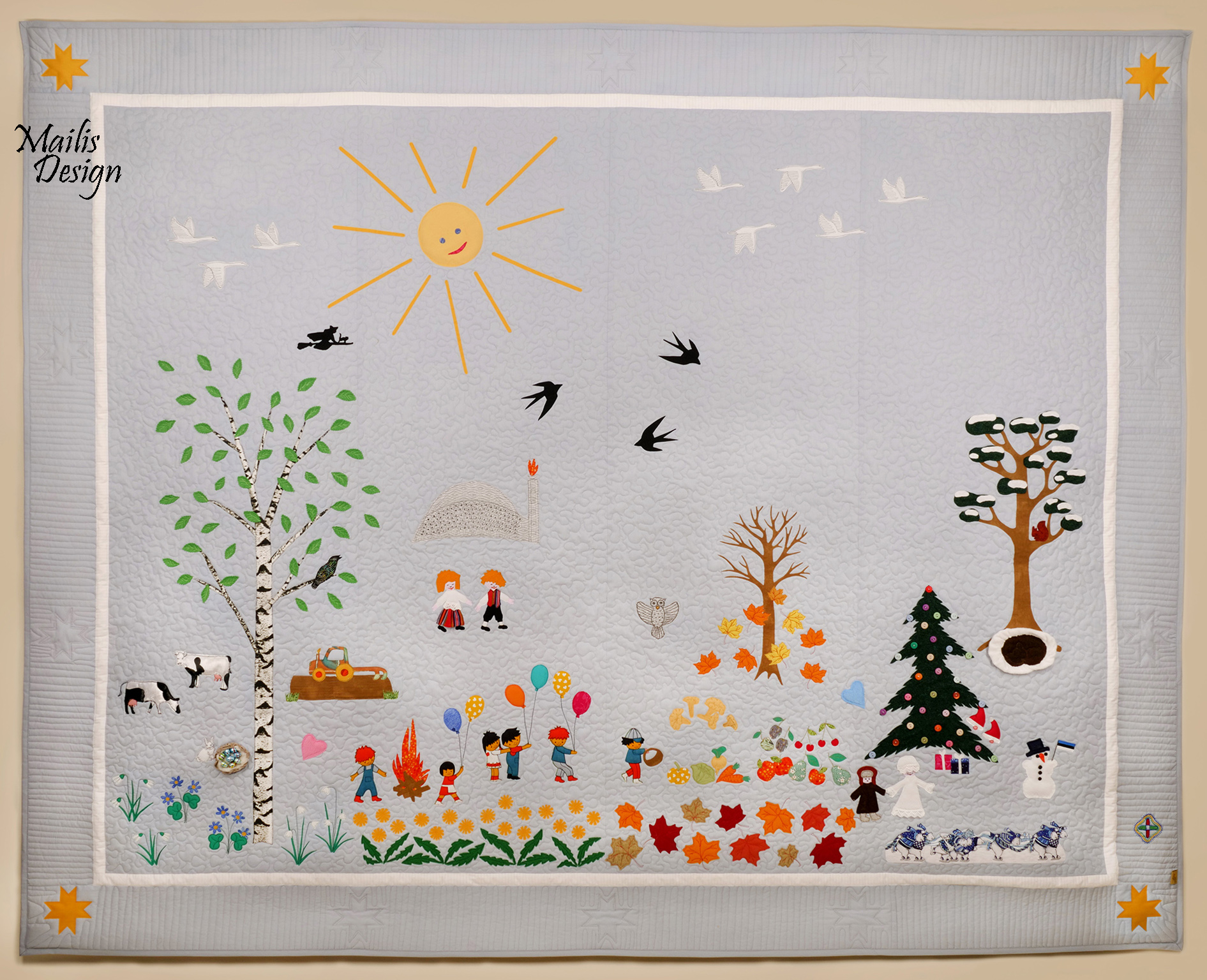
Let me ceremonially present my latest enormous piece, a beauty made over a long time and with heart, the patchwork hanging "The seasons and the dates of the Estonian folk calendar". (Size 260 x 210 cm.)
The hanging is a commission from a nursery in our area, and I sewed it for no more and no less than a month. I was of course turning the ideas over long before that, and all through that month of making it, by night as well as by day. Anyone who has ever been taken over by a creative spirit knows what I am talking about.
The themes and characters on the hanging:
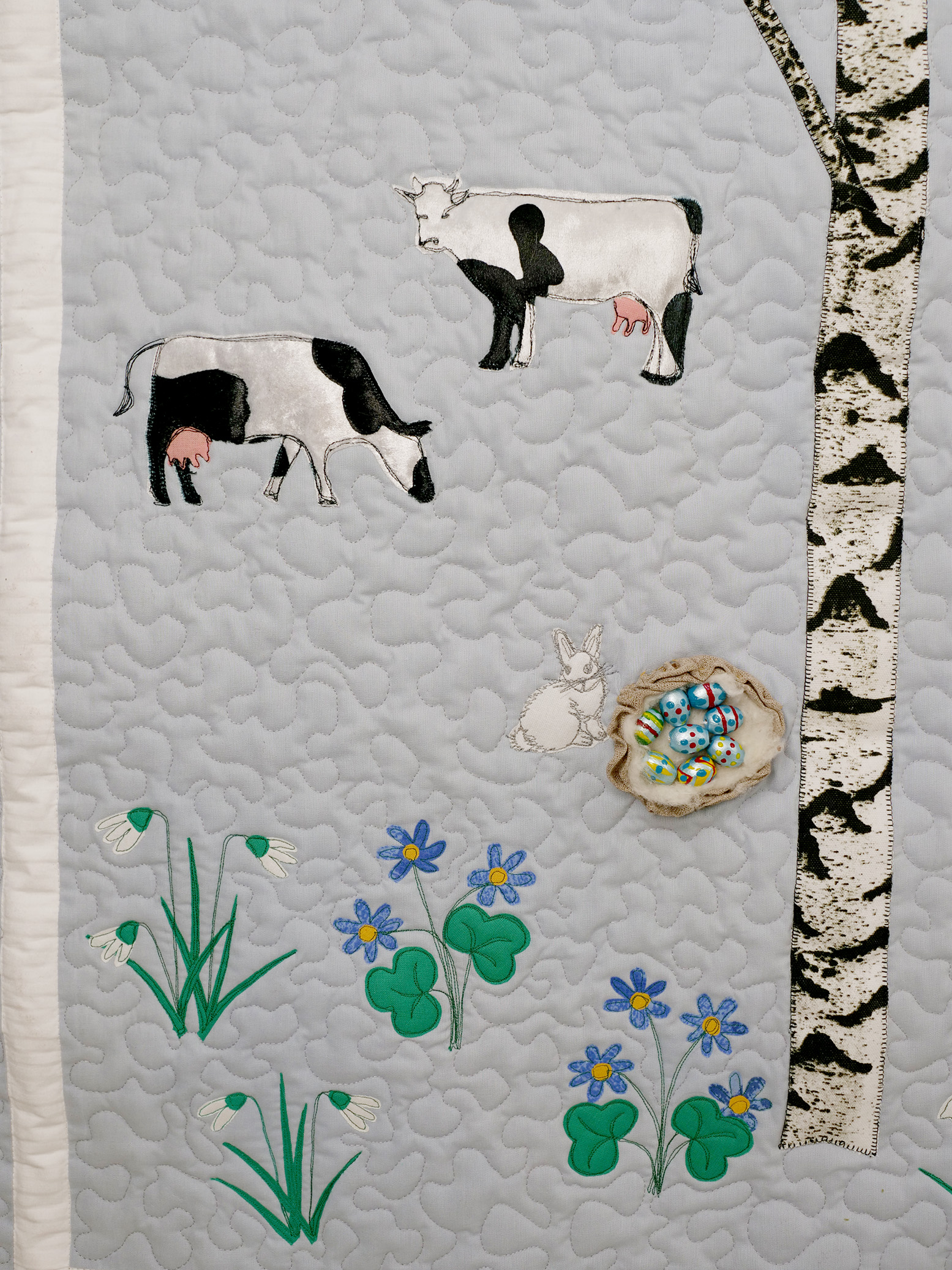
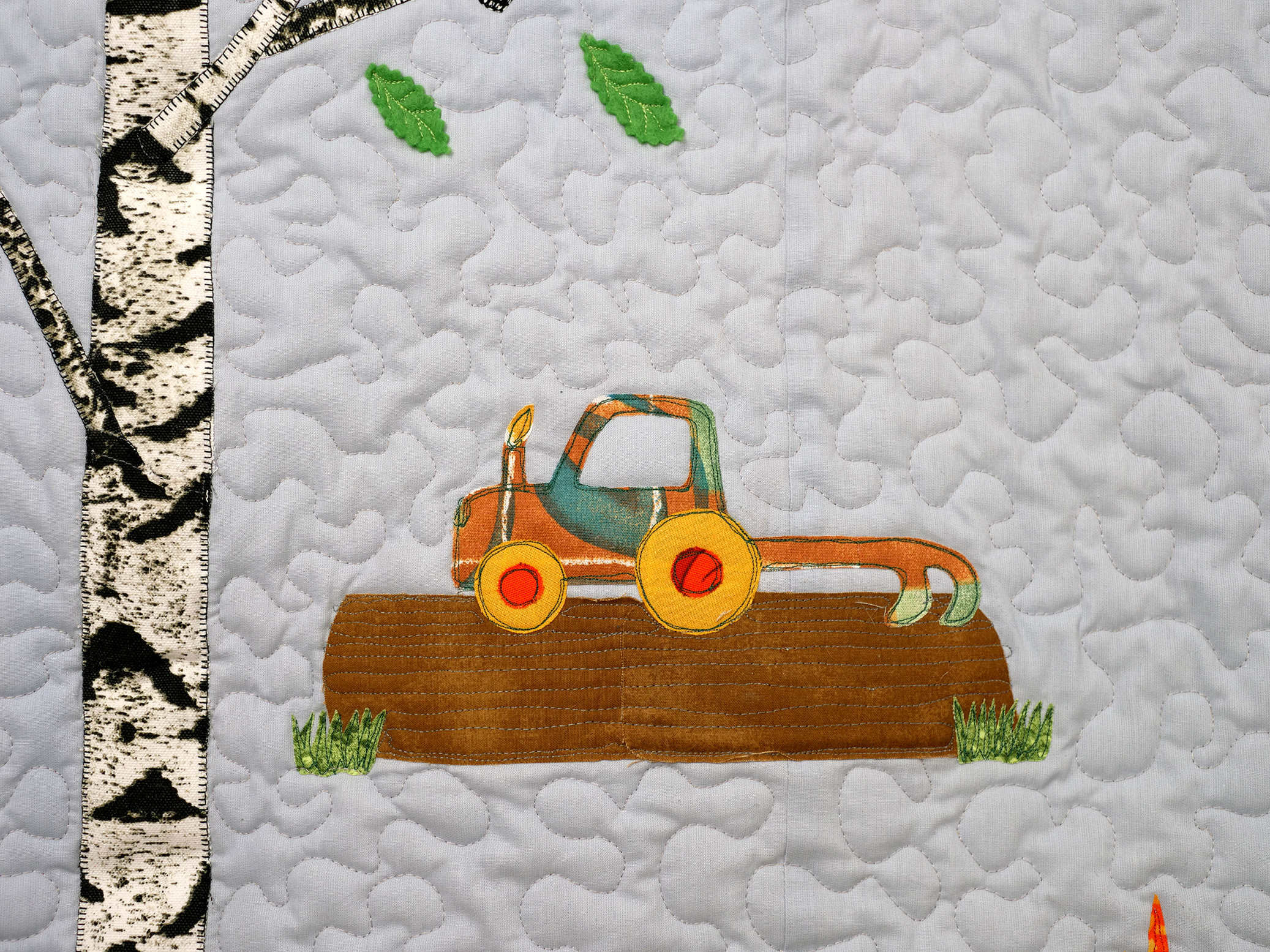
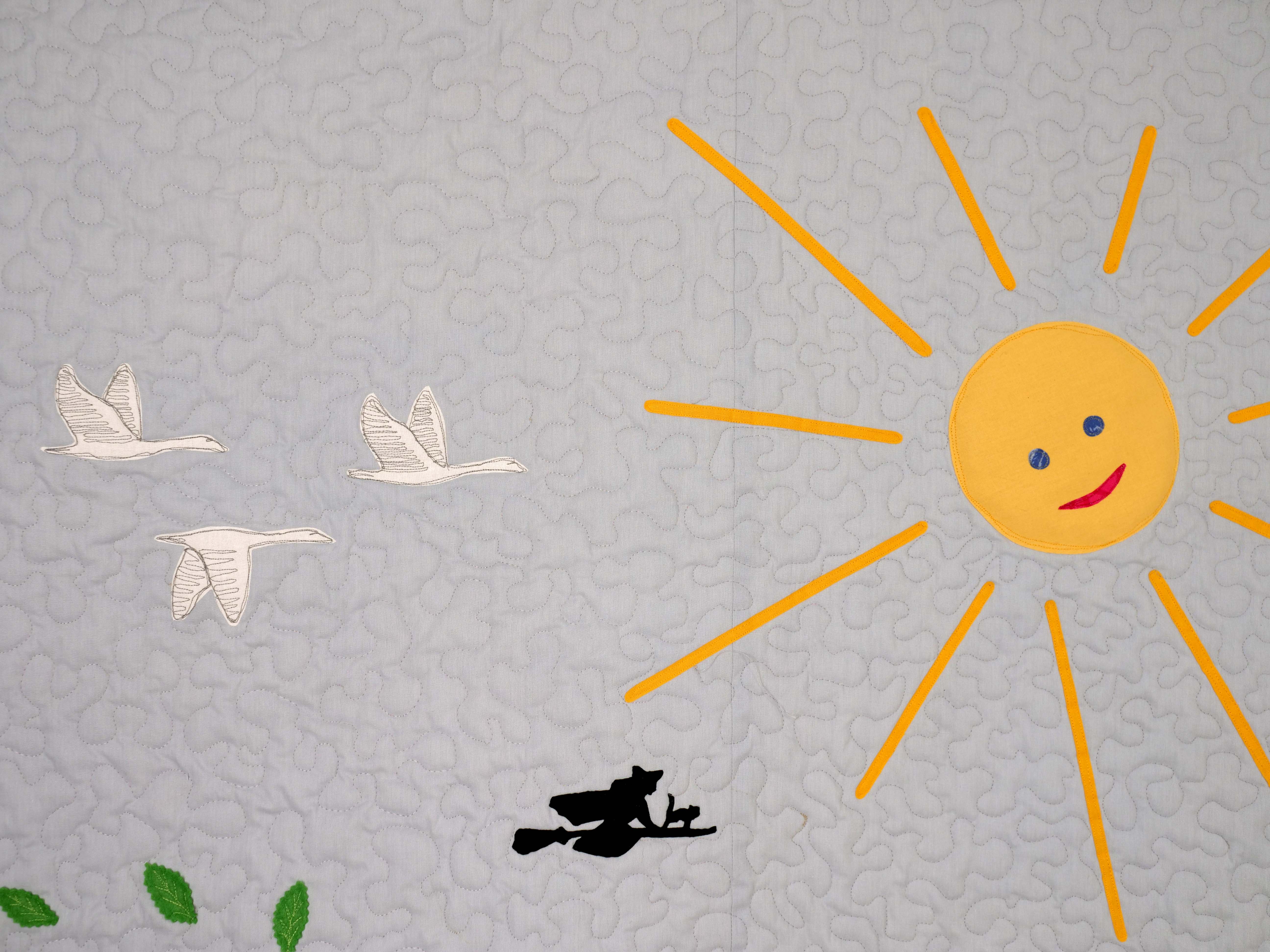
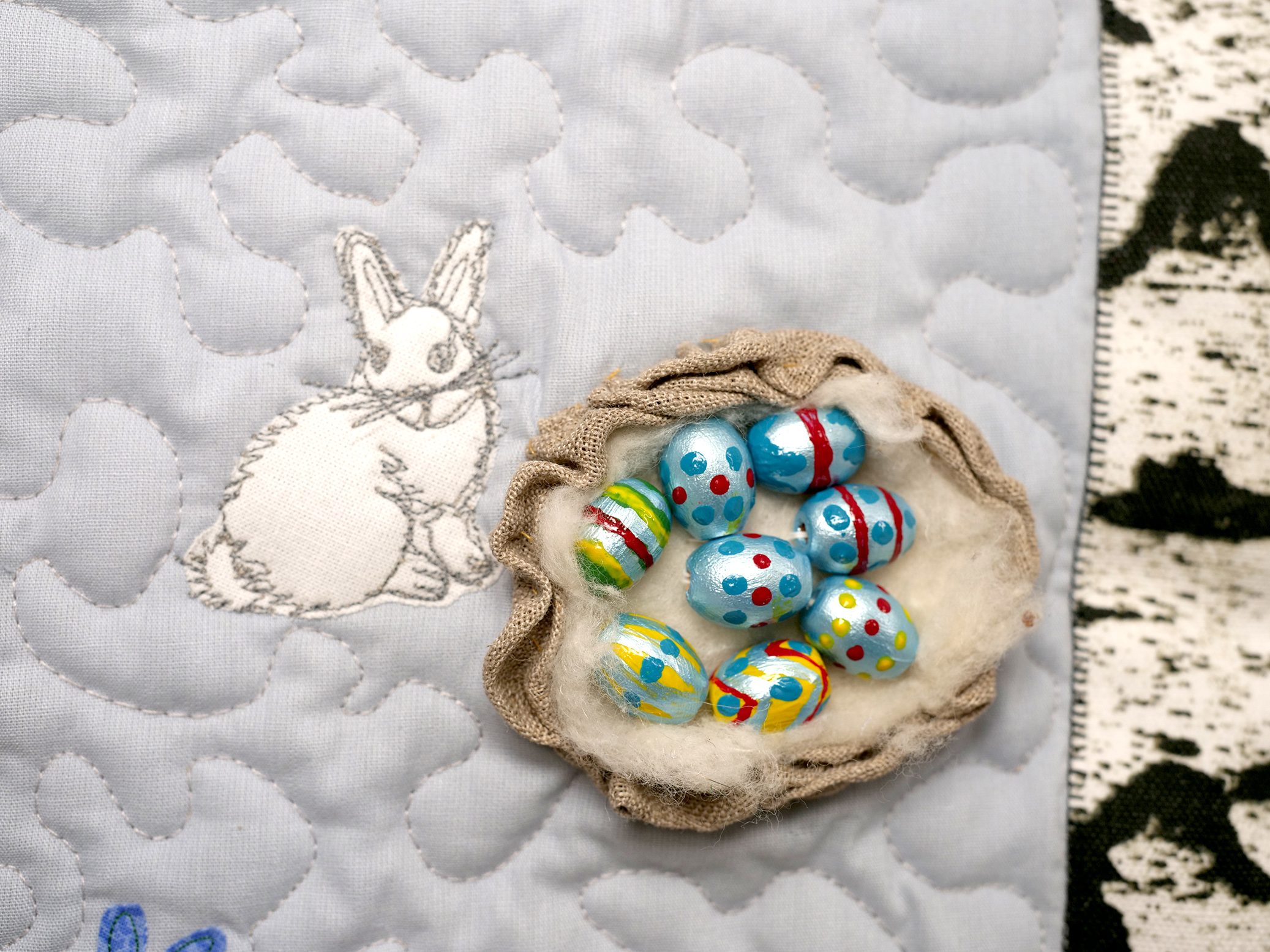
SPRING: the arrival of the migrating birds in March; the trees come into leaf, a birch with pale green spring leaves (March to April), a starling (Estonia's bird of the year 2021) greeting spring with its song; the spring flowers appear: snowdrops, spring snowflakes, liverworts; Easter, the egg festival, a rabbit and festival eggs in a nest (a movable feast, 22 March to 26 April); the day the herds go out, cows in the pasture (1 April); ploughing day, a tractor ploughing a field (14 April); Walpurgis night, a witch on a broomstick (1 May); Mother's Day, a small pink heart (the 2nd Sunday in May).
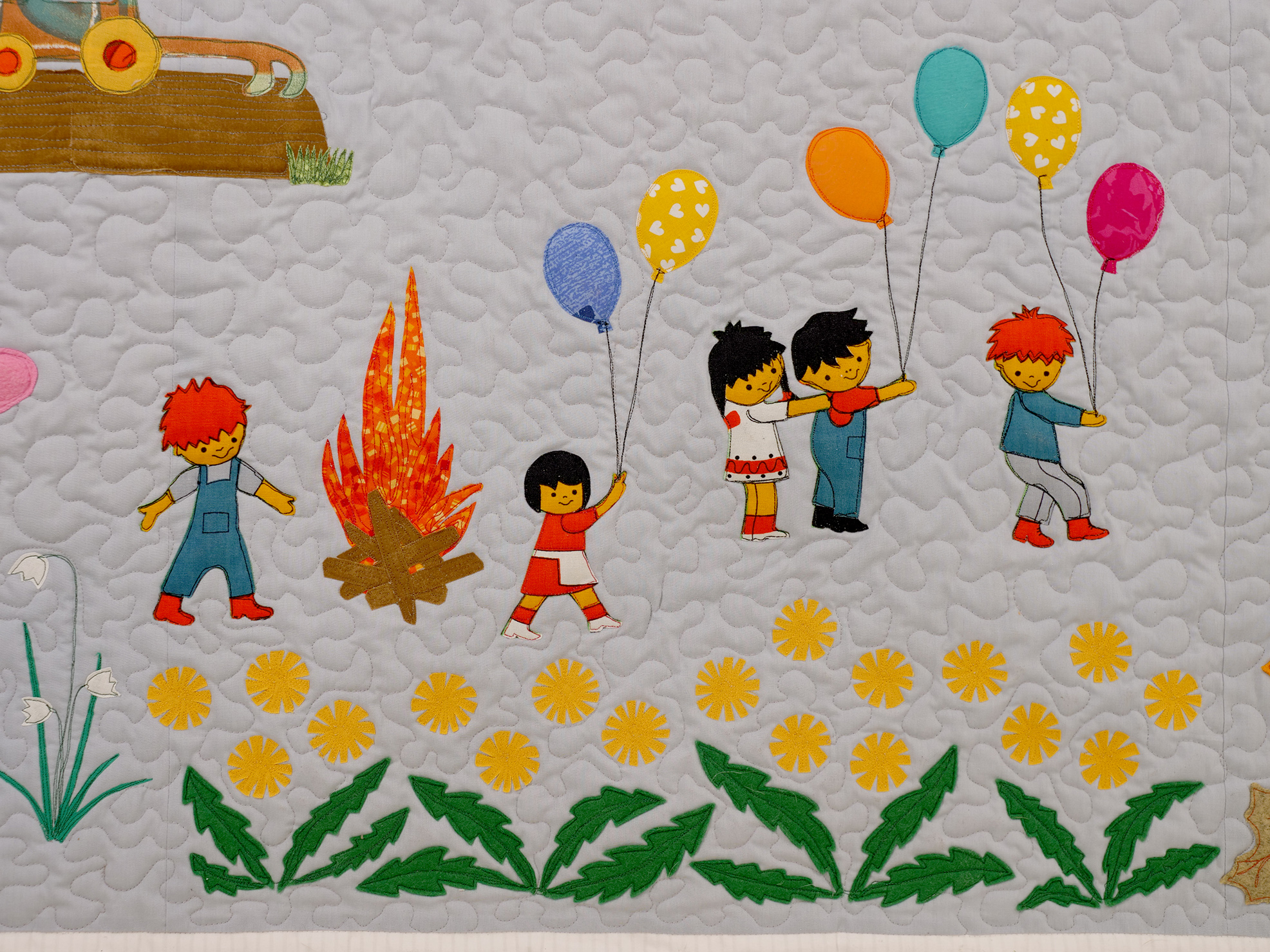
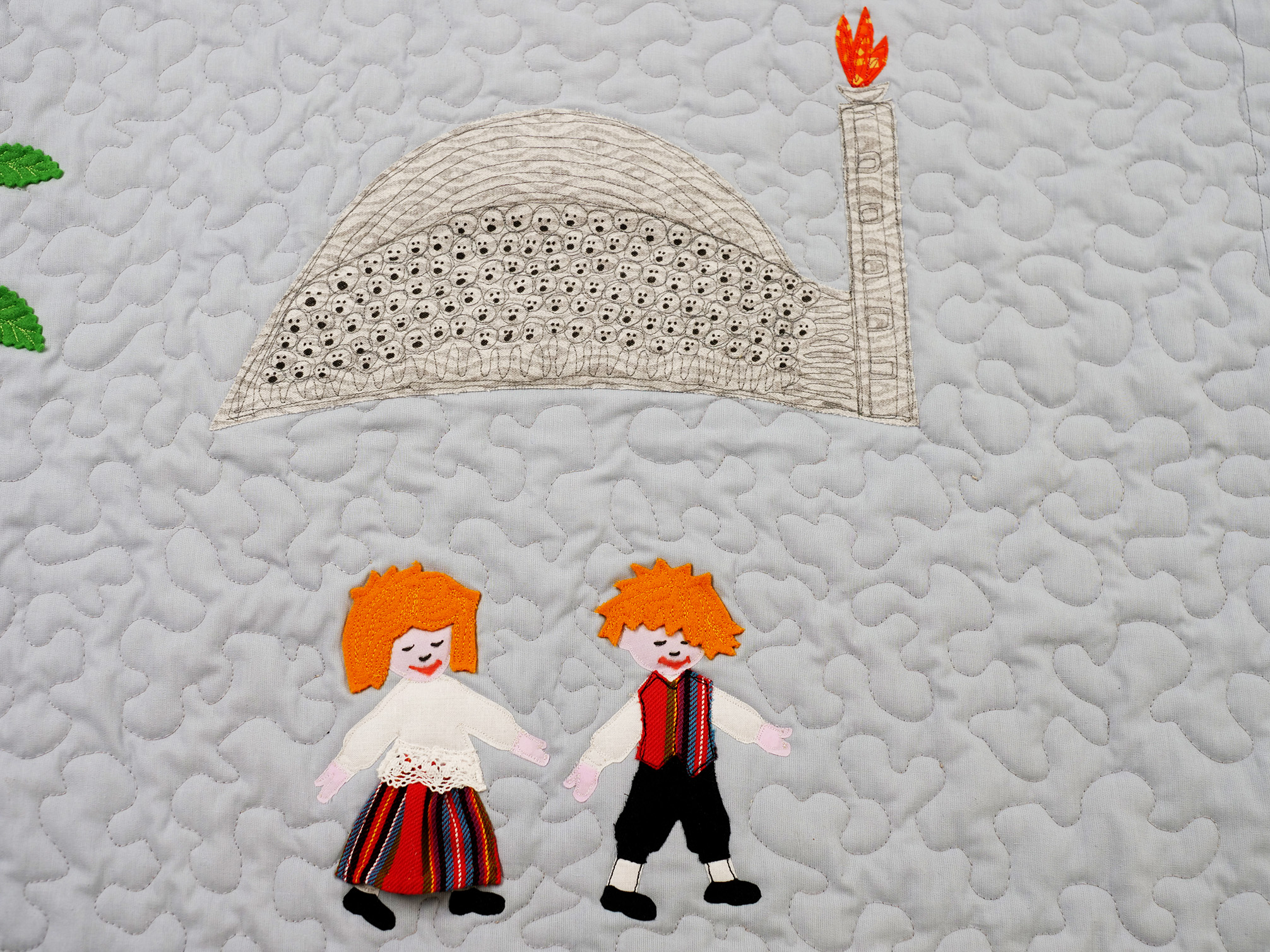
SUMMER: the sun and the summer solstice, the longest day and shortest night of the year in the northern hemisphere (20 or 21 June); Midsummer Day, a great bonfire and happy children (24 June); the song festival and the dance festival, the song stage and children in national dress (July); dandelions as symbols of summer (a dandelion flower opens an hour after sunrise and closes at dusk; when rain is coming the flower head does not open fully); barn swallows, Estonia's national birds.
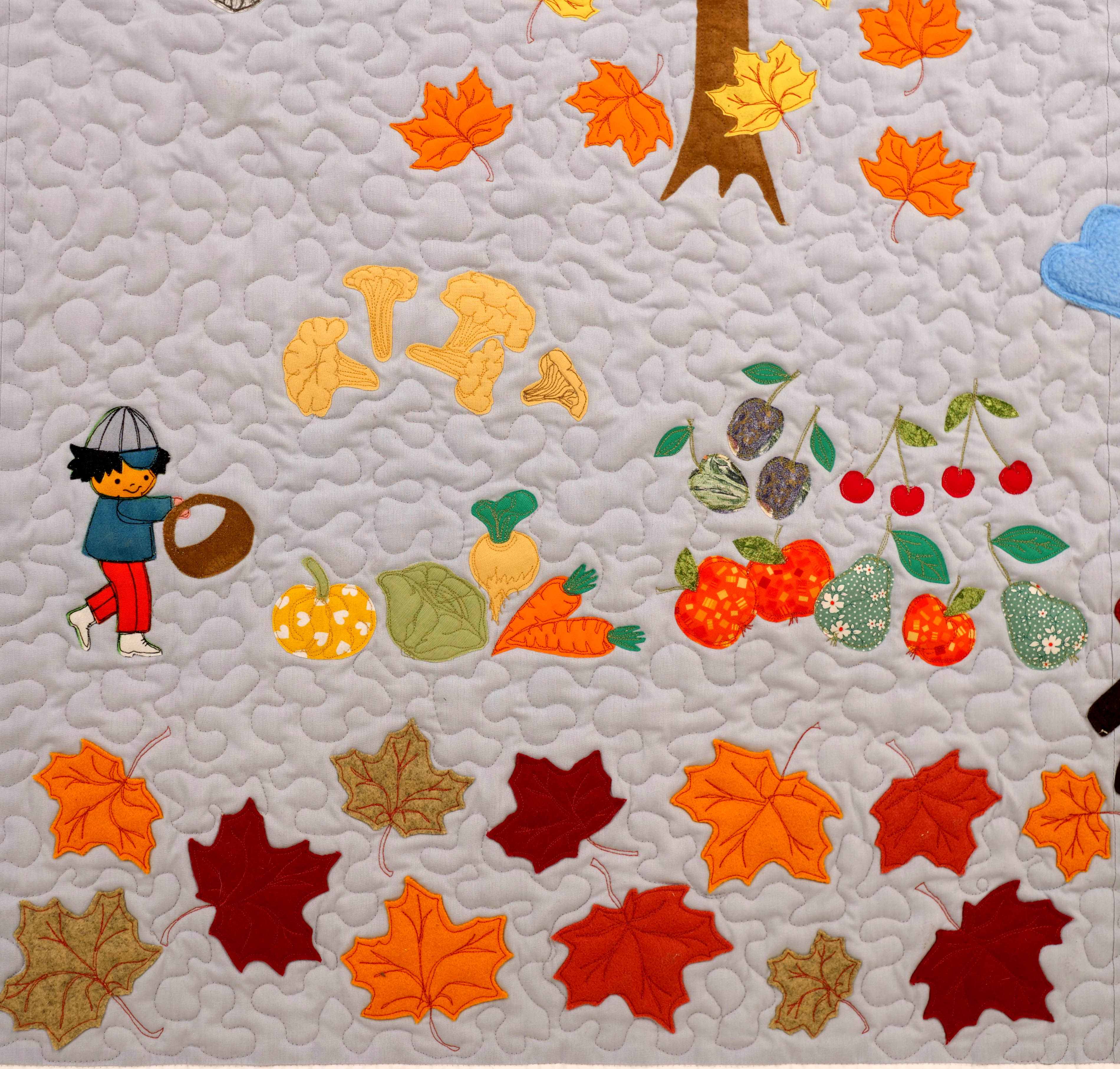
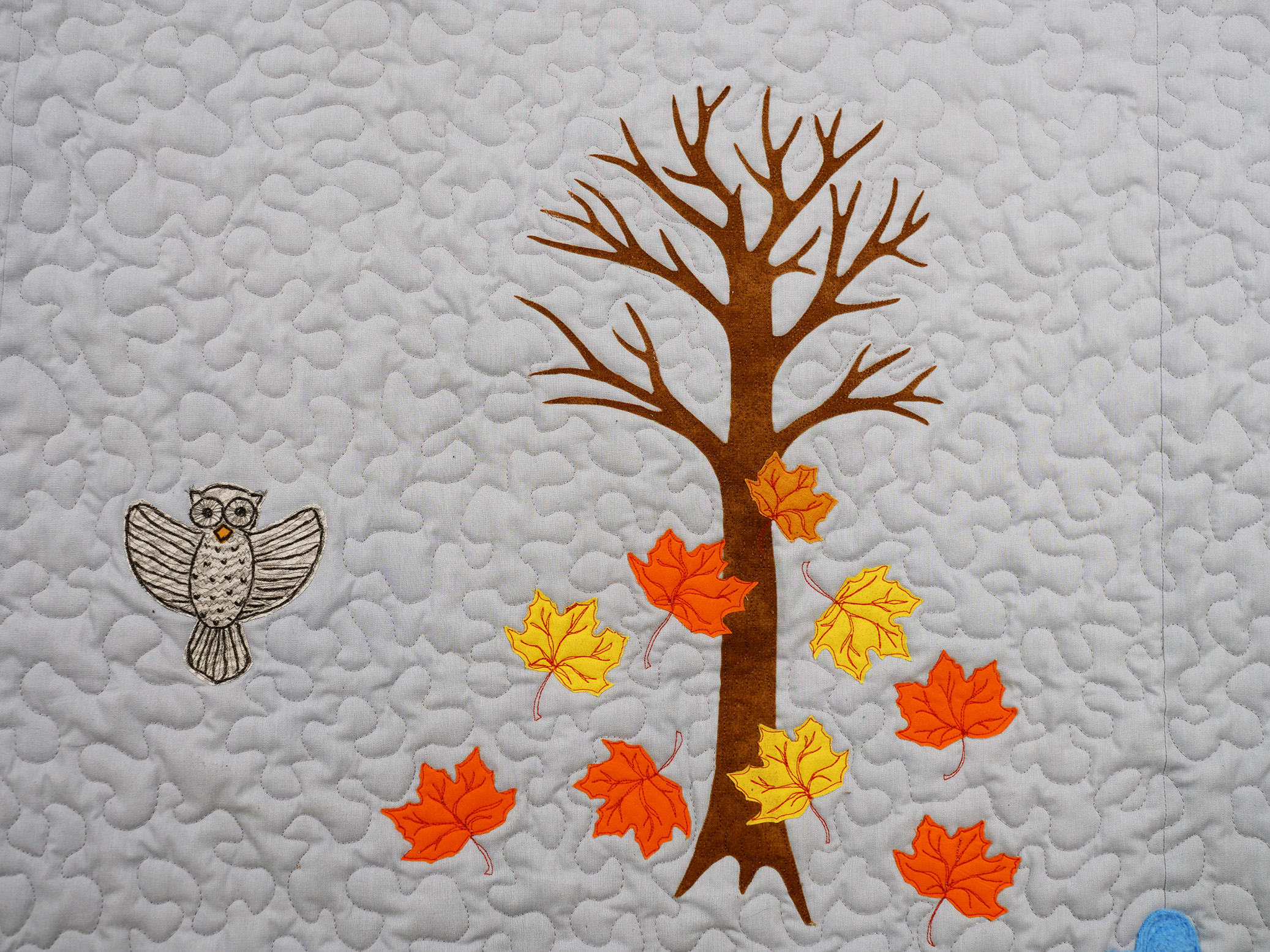
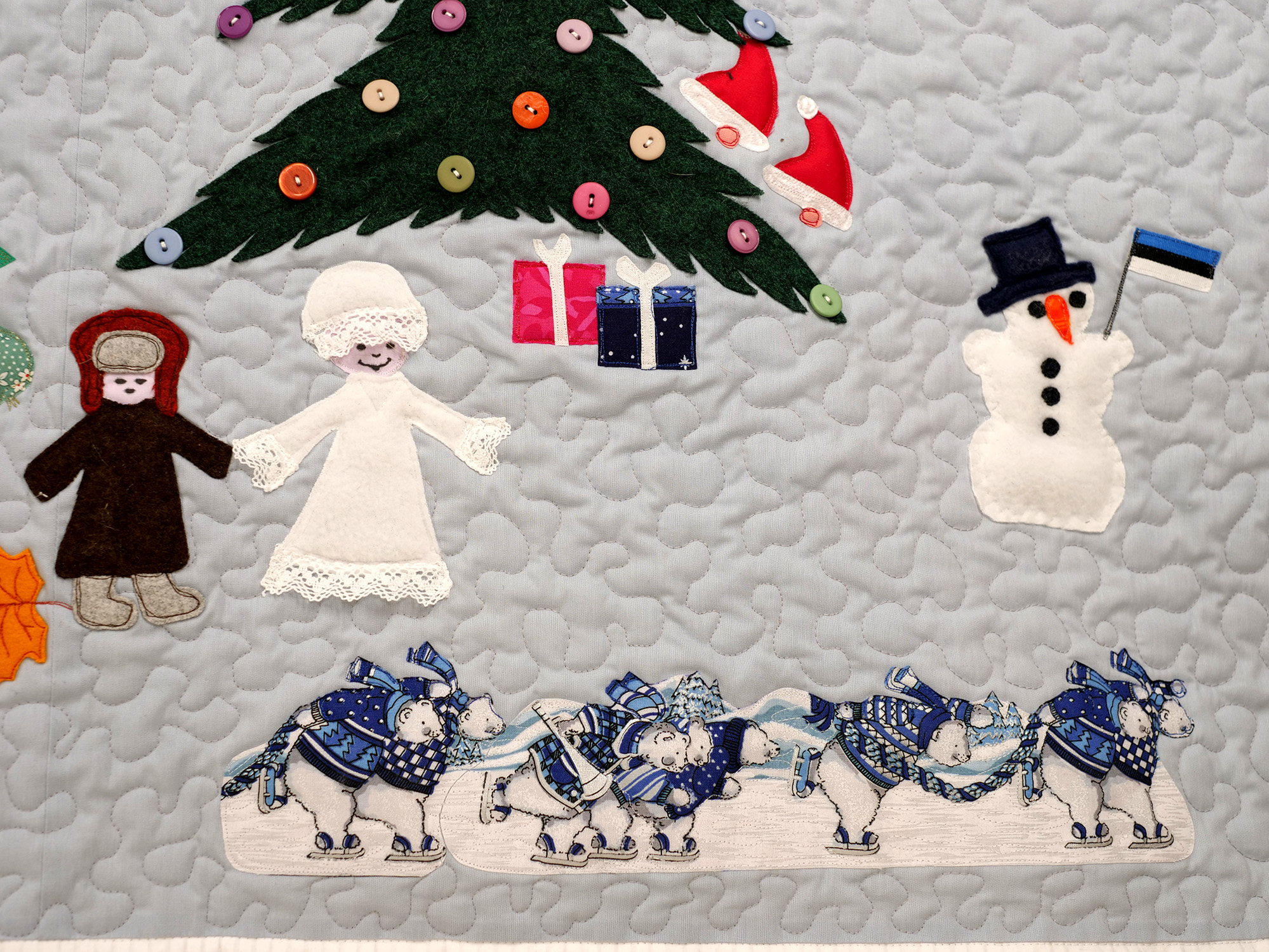
AUTUMN: the day of knowledge, an owl as the symbol of wisdom (1 September); mushrooms, fruit and vegetables ripening; the autumn leaf fall, leaves in autumn colours; the migrating birds depart; Father's Day, a small pale blue heart (the 2nd Sunday in November); St Martin's Day and St Catherine's Day, a boy in a fur coat and a girl in white clothes (10 November and 25 November).
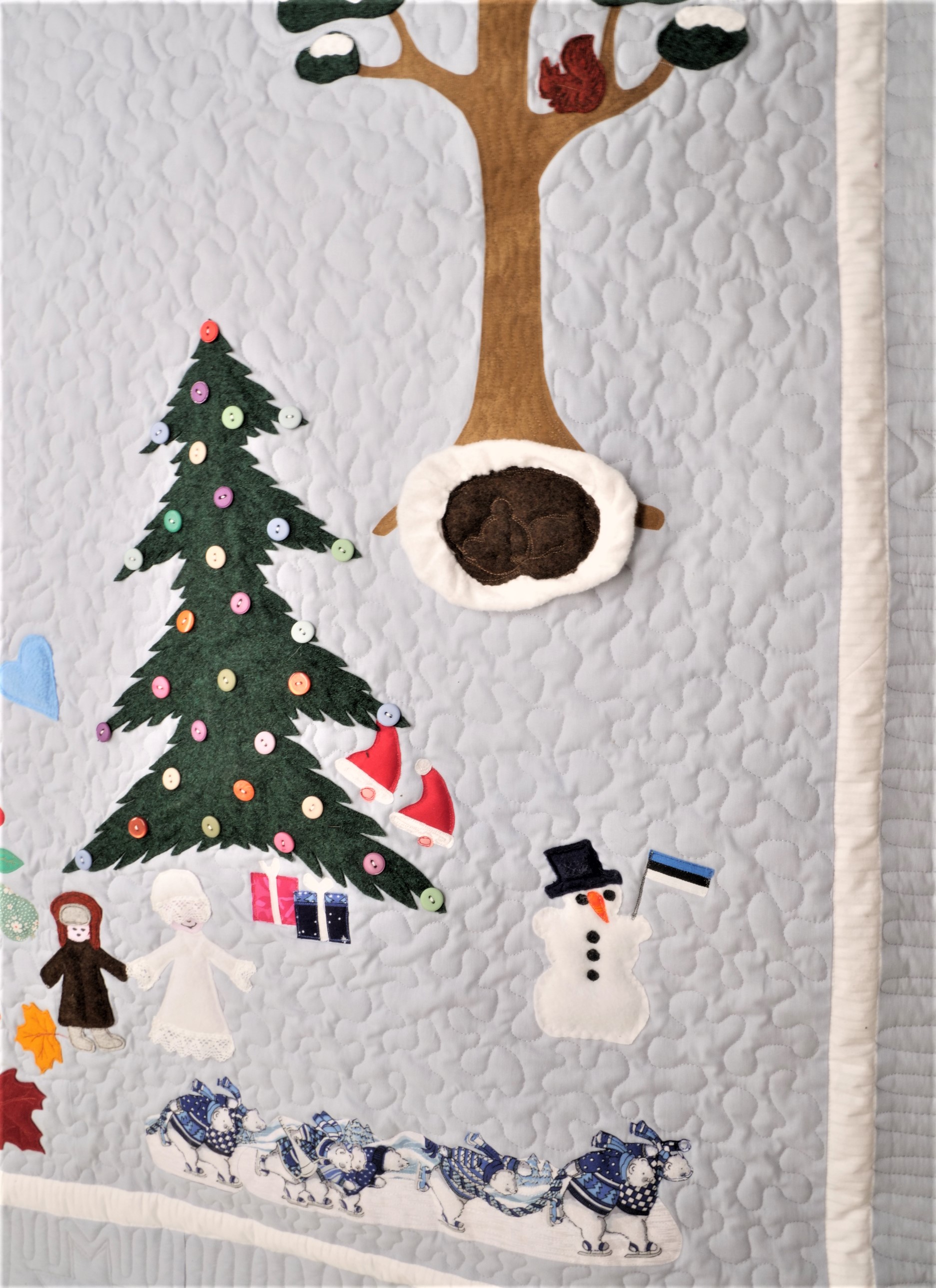
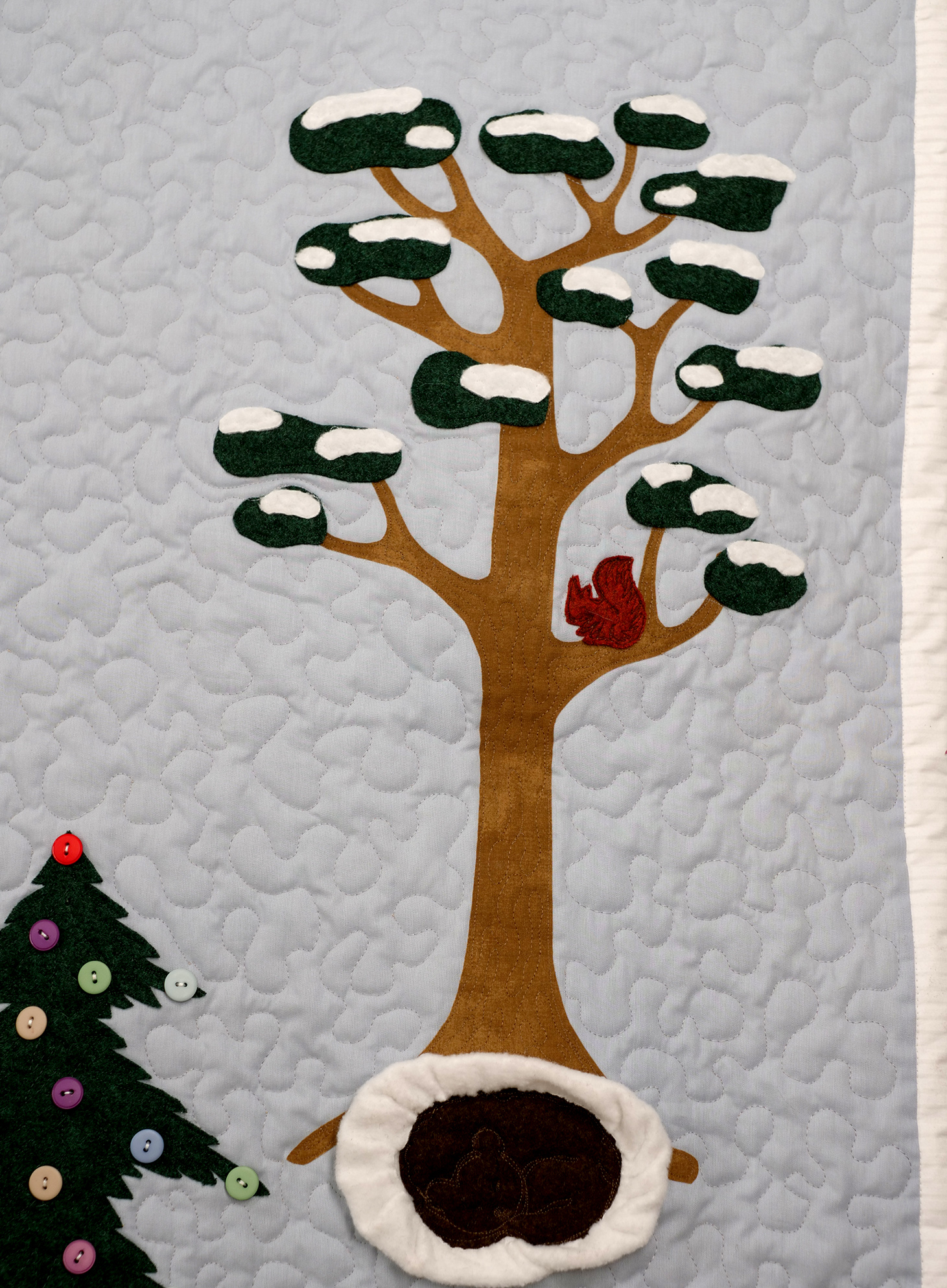
WINTER: Christmas, a Christmas tree, presents, elves (24 December); the animals sleep through the winter, a bear in a snowy den; Shrovetide (a movable feast, 8 February to 7 March) and winter pleasures, polar bears skating; the birthday of the Republic of Estonia, a snowman with a blue, black and white flag.
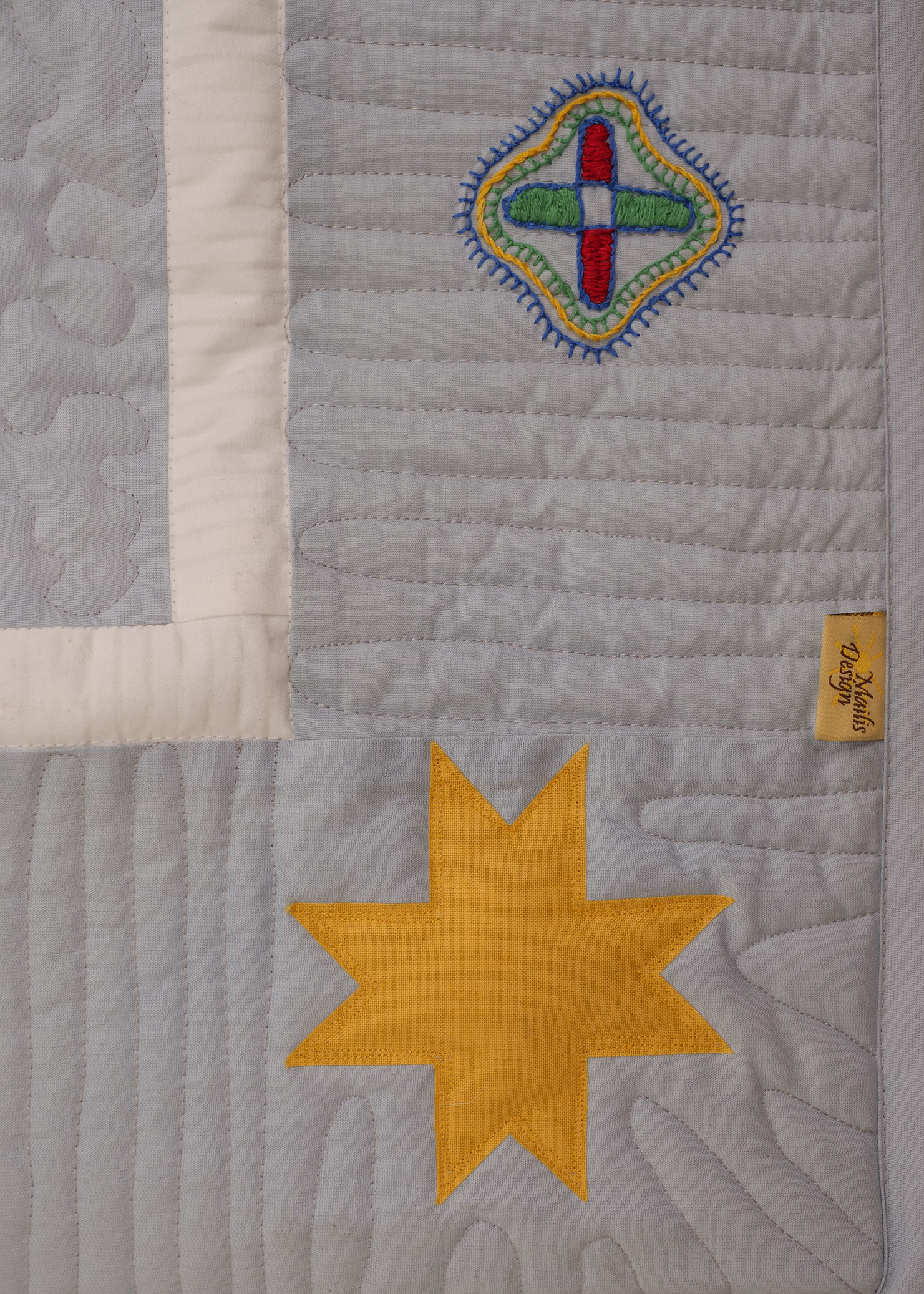
The frame of the wall hanging is decorated with eight pointed stars and one tiny embroidered CROSS.
The eight pointed star, or eight pointed cross, the cross radiating light, the Muhu pine, is widely known in Europe as a magical sign bringing good fortune, a symbol of love and fertility. It was also known as the symbol of the morning star Venus, a symbol of light against darkness. As the symbol of the North Star it is a guide, showing both the main points of the compass and those in between, such as north east, south east, south west and north west.
The archaic embroidery, the cross: in Estonian folk belief the cross was important as a magic sign in protective magic; it was made on every possible object as protection against evil spirits and witchcraft. Together with incantations it was used to treat illnesses and injuries. As an "eternal" sign the cross motif originally marked the connections between heaven and earth, standing at the centre of the world. Crosses surrounded by multiple outlines have carried a protective meaning in both Christian and pagan symbolism.