The kannel bags of model no. 2, designed and sewn by me, and the first 10 bags of that model, are finished. The first model, with a wadded lining, was not a good enough solution for sewing an instrument bag and did not satisfy my critical mind. When the next order came in, I set about creating a new instrument bag model with a slightly more professional look.
Designing the model, the trial pieces and completing the first order took close to half a year altogether. But good things take time. There was a mad amount of puzzling, unpicking and redoing. More than once I wanted to throw the whole thing into a corner and simply make some ordinary cotton bags. But thanks to a patient client who took all my apologies calmly and simply kept waiting, I had the strength to carry on.
Spring turned into summer and summer into autumn, and here they finally are. My darlings 🙂
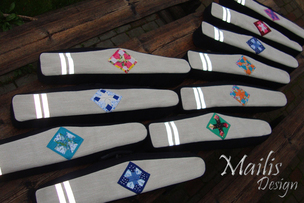
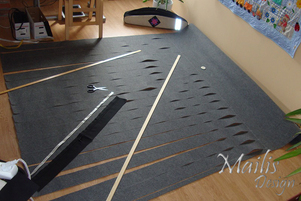
In the pictures: cutting the side pieces from the material that keeps the bag stiff.
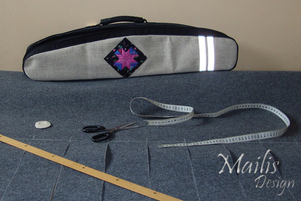
Kannel bags, model 2.
The picture shows bags for a 6 or 7 stringed kannel, that is up to 80 cm long. Using the same materials I am ready to sew bags for other small instruments as well.
Materials. The outer surface of the bag is a strong, waterproof bag fabric (polyester PVC), and inside it, as reinforcement, a stiff material similar to mistra.
For the finish there is corded binding, and inside, the seams are bound with impregnated binding. The cover of the bag consists of a layer of thicker fabric with a patchwork ornament and reflective tape, with waterproof fabric (polyester PVC) as the lower layer.
The ornaments on the covers are all different, each one unique. Made of folded brightly coloured cotton fabric.
The bag has a comfortable handle with a rubber cover, a shoulder strap of adjustable length and a rubber shoulder pad on the strap. The bag is fastened with a zip with two pulls, and inside there is a small zipped pocket for the instrument's accessories.
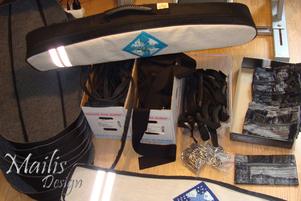
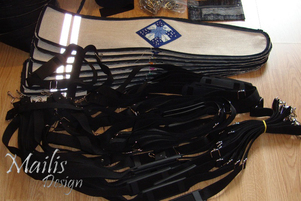
In the pictures: a box of corded binding, a box of inner binding, a box of handles and pockets. Unfinished bag bodies in one pile and covers in another.
A little statistics about the bags finished today (12 of them).
22 m2 of various fabrics
4 m of reflective tape
17 m of zip
24 m of webbing
43 m of cord for the corded binding
24 ready made rubber parts (handles, strap covers)
170 metal and plastic parts (eyelets, swivels, clips and so on)
1900 m of seams
I will work out the material cost, add the working hours planned for making the model and put together a price list for the instrument bags. I will add the price list to the page "Ordering and price list".
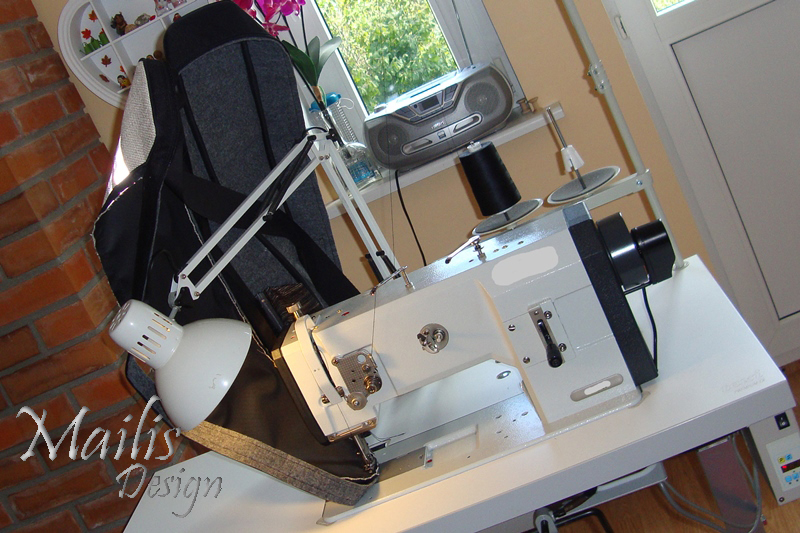
In the pictures: who is tougher, the fabric or me and the machine? And the finished work, that is the joy of work 🙂
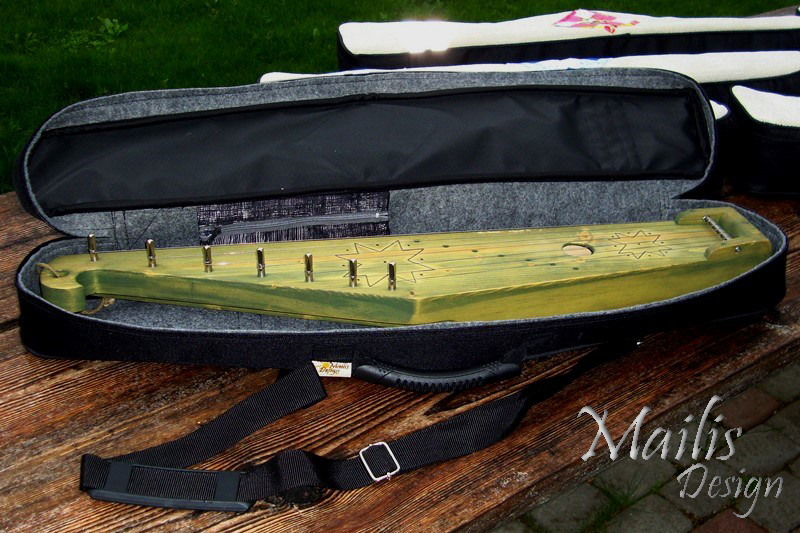
Kannel bag model 3.
Next I plan to create one more model of small instrument bag, something simpler and more affordable.
It would be of cotton fabric, with a wadded interlining and a cotton lining, quilted through. Textile decorations on the front. As the outer fabric I could also use rubberised nylon or impregnated fabric. The bag is rectangular, with the fastening at the end of the bag rather than on the side, and with a simple handle.
I hope to be able to present the new model to you at the end of September or the beginning of October.
The model 2 described here, and model 3 in the making, will also serve as examples for sewing bags for other small instruments in future.
What sets apart the instrument bags I sew is that they are quality, exclusive bags, made and decorated by hand. In every piece there is a scrap of soul and of good cheer.