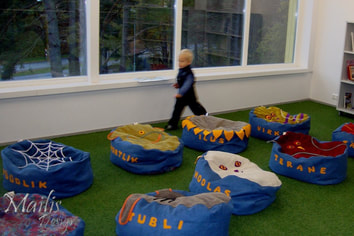
It is a good few years since I sewed beanbags of upholstery fabric for the local school's quiet room. Now I service them once every year or two: I wash them, make a few small repairs and refill them. The filling of a beanbag settles over time, as everyone knows.
I have to admit that I am pleasantly surprised myself that they have lasted so long, with the whole school romping about on them day after day.
The head of the school keeps praising them, saying they are so lovely and bring the children a lot of joy. Throwing them is not allowed, but jumping and leaping, building caves and towers, that is apparently everyday fun.
How to care for fabric beanbags.
These 12 beanbags are now in their third year of use. On previous occasions I washed them selectively; some also needed appliques secured here and there at a corner.
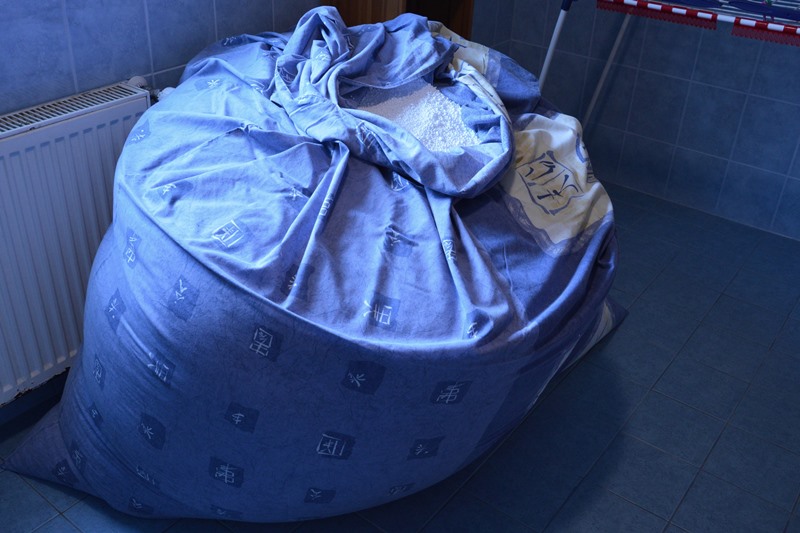
This time I emptied them all of granules with a scoop and put them in the washing machine (40 C, 1 h). For the granules I took a double width duvet cover, which got filled to the brim. About 500 litres fitted in altogether, everything left from the last filling (1000 litres).
For emptying them you could also use large plastic bags, but plastic makes the granules terribly static and then you chase them around the room. There are enough of them everywhere except in the plastic bag: on your clothes, on the scoop, on you yourself and so on. I believe you will go mad before you manage to bring them under your control.
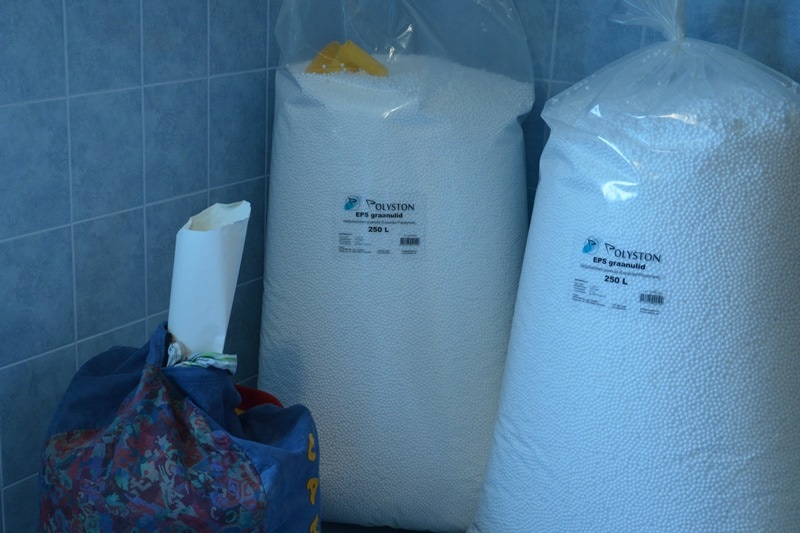
When you buy them the granules are in a plastic bag too, but then you only have to lift them out of it, not first scoop them in and then scoop them out again. If you have a wooden vessel to scoop with, it may be easier. I have an ordinary plastic milk jug.
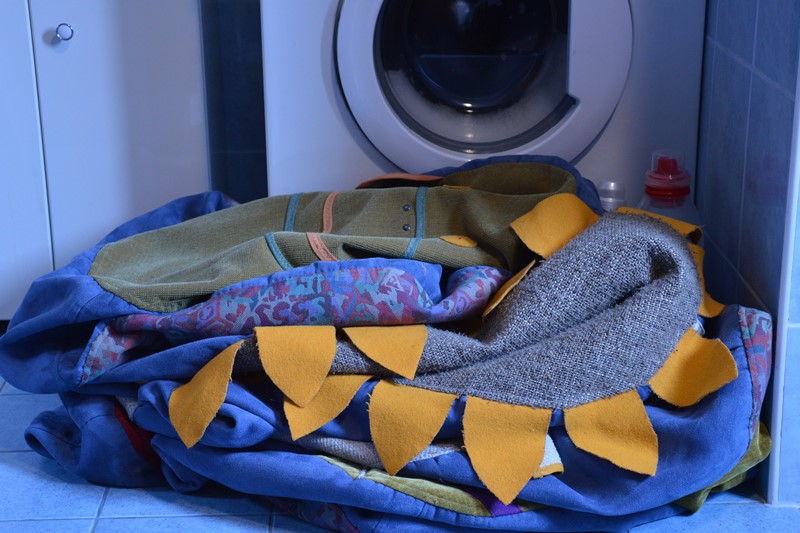
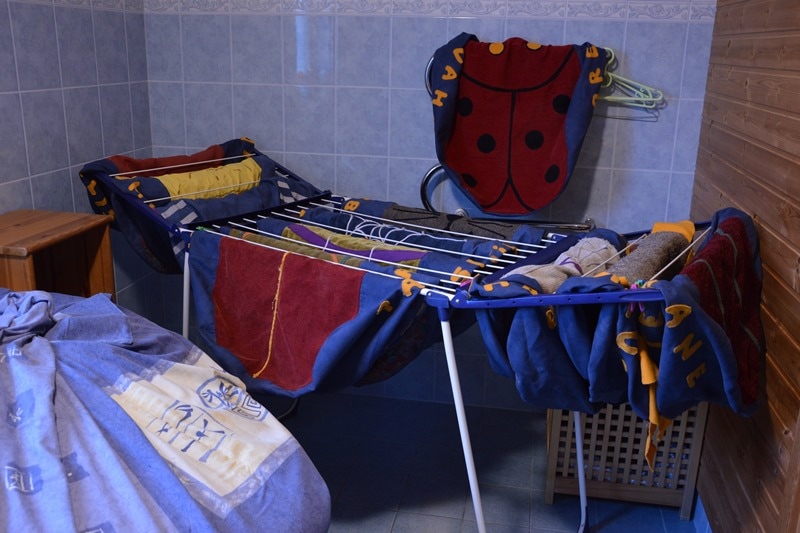
All 12 chairs are now washed and in a row on the line. A day of drying and then on to the repairs. The spider's web had come away from the fabric here and there, and the cat needed one more whisker sewn on. All the animals had had their button eyes snapped off, but I decided against sewing those on again. Those big buttons under your bottom are probably not the wisest addition anyway.
For filling the chairs I made a funnel of thicker paper. Long enough to reach deep inside the bag, with the edges glued with a glue stick, because otherwise the gaps at the edges of the funnel are soon bulging with granules and fewer and fewer reach the inside of the bag. At the top the funnel should be a fair bit wider than the vessel you pour from, so you can pour with a good swing.
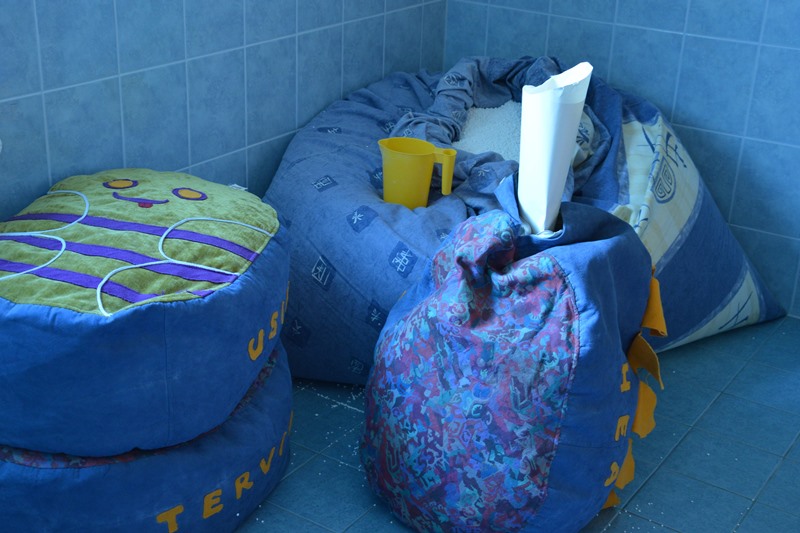
First half the chairs got the old granules, then the remaining half got new ones. A little was left over from that quantity too.
Now the bags into the car and back to the school. On the way home half the car was full of them; going back only the driver's seat was free, everything else full from floor to ceiling. But it is only a few hundred metres of village road to drive.
Fabric or artificial leather beanbag?
At home fabric is certainly more pleasant. Emptying and washing them every couple of years is no great problem. If you are going to sew them yourself, be sure to use the threads used in the furniture industry. Sewing upholstery fabric with ordinary sewing thread is not recommended.
If you have pets or other characters prone to mess, then an artificial leather beanbag is probably easier to keep clean.
My first beanbags I sewed double, with a second, inner bag for the granules.
Later I gave up the double bag. First because of the price (who buys one beanbag and agrees to pay for two). And second, how often is a beanbag actually washed? How often do you wash your sofas and armchairs?
To protect children, I sew a pocket for the zip pull at the end of the zip's cover; that is, when I close the zip I press the pull into the end there between the seams and a child cannot open the zip by themselves.