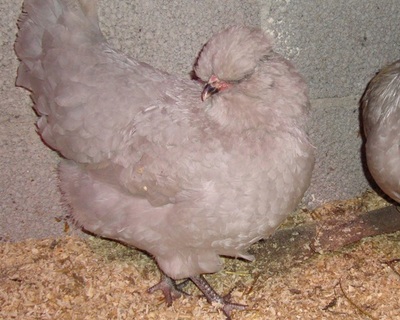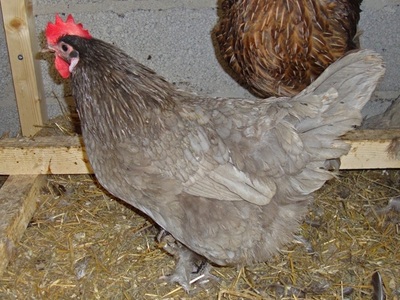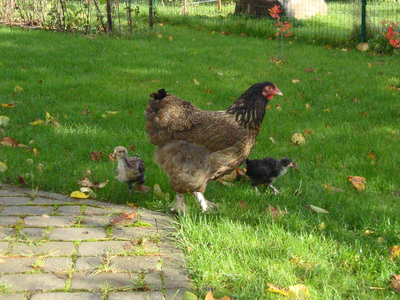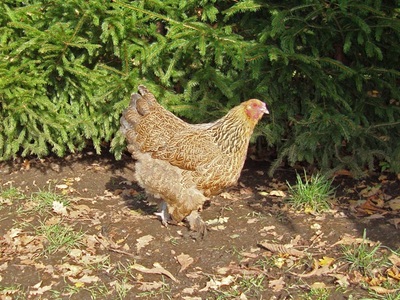
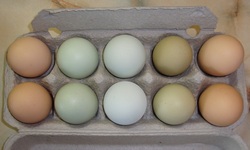
This spring and winter we have 8 hens and a rooster. The egg box is exactly that colourful: cream from the Brahmas, blue from the Araucana, pale blue from the Araucana cross and tiny olive green eggs from the young mixes.
Two hens are resting at the moment, one of them the Marans. Below the text are pictures of the hens whose hatching eggs I collected.
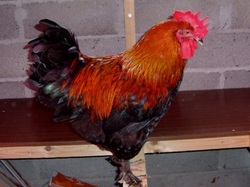
My rooster this year is a purebred Copper Black Marans. Unfortunately my only hen of the same breed does not lay eggs suitable for hatching (the shell is too thin and porous). So into the incubator go the eggs of the Brahmas and Araucanas. Thanks to the Marans rooster those chicks will grow into birds laying dark brown (Brahma plus Marans) and olive green (Araucana plus Marans) eggs.
Friends have asked me what makes an egg a hatching egg. Well, it is an egg like any other, only fertilised, with a strong, smooth, even shell and the colour typical of the breed. That is to say, while eggs both with and without a rooster are fine to eat, and so are eggs that look less than standard, only the best are chosen as hatching eggs.
The rooster and hens you want to mate should be put together a couple of days before you start collecting hatching eggs. If a hen has previously shared a run with a rooster whose offspring you do not want, then you should not collect hatching eggs from her for three weeks, or so they say.
Pictures of the hens whose hatching eggs I collected.