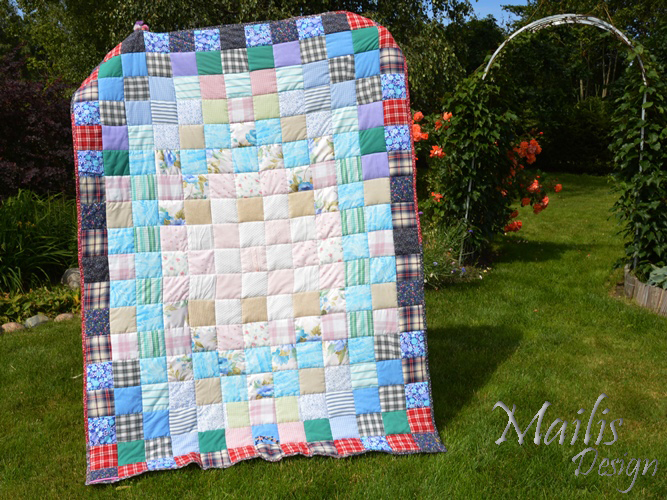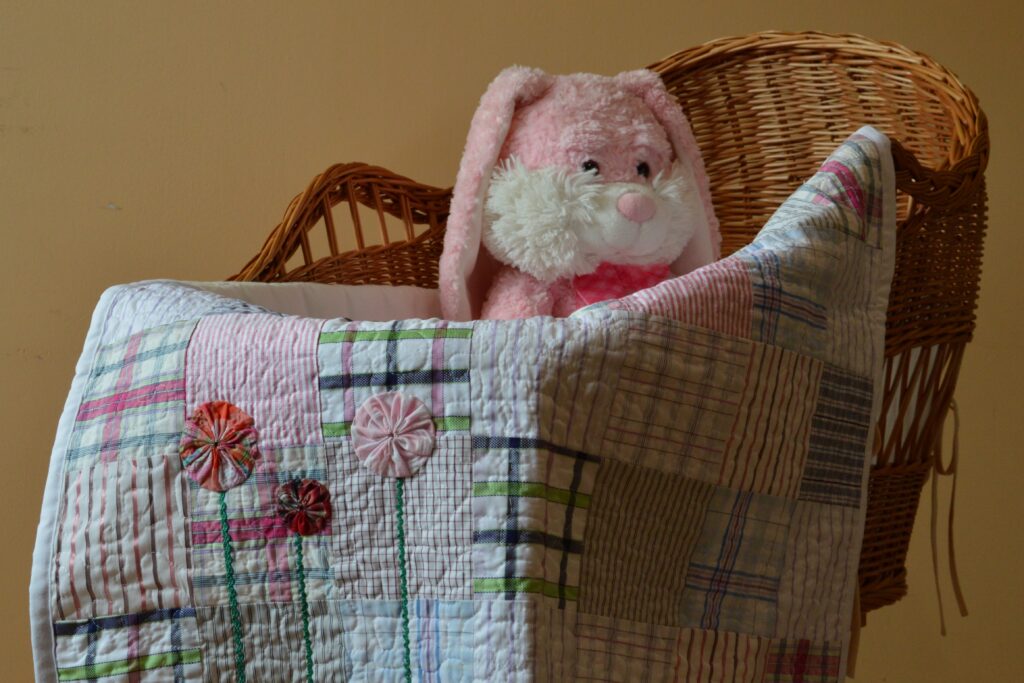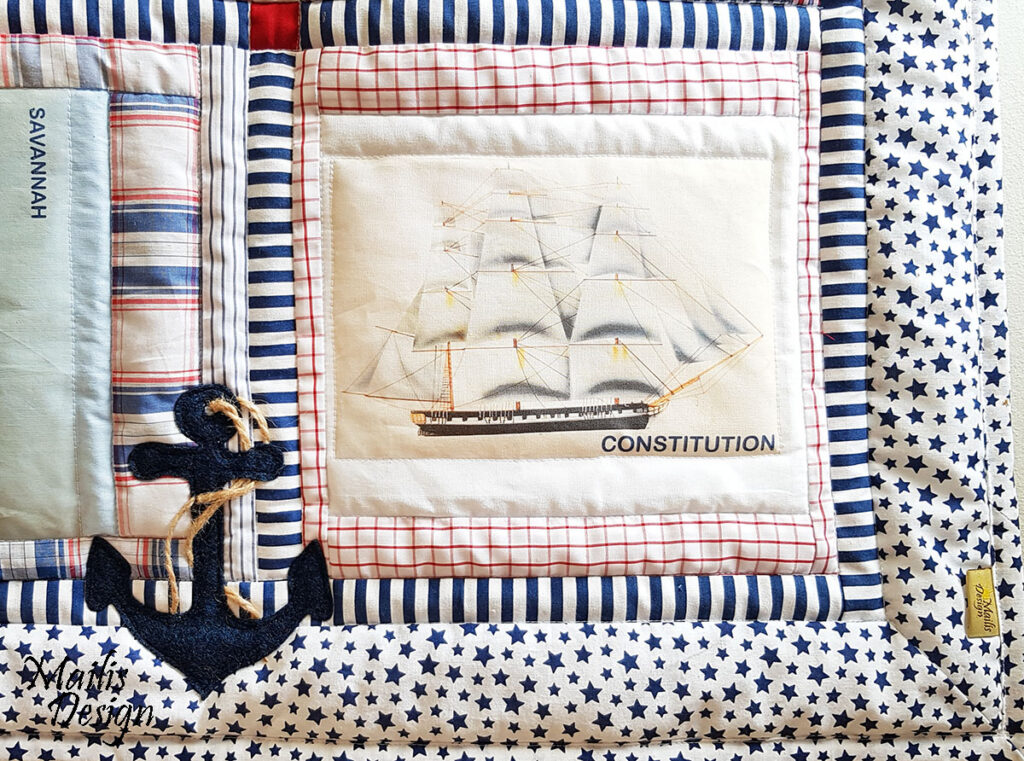
Once again I am in trouble with my deadlines. But what can you do; before the summer began, more than ten large quilts were ordered at once. Of course I am very happy, but I still cannot plan my time. However much slack I build into the deadlines, the summer keeps rushing mercilessly on, whether I am toiling in the flower garden, wrestling with chicks or spending time with the grandchildren.
Today I start finishing the quilts made from reclaimed materials.
The story with those was that when I made the quotation I assumed ordinary cotton fabrics were involved. I do not know why, but that is how it happened. And oh, what a surprise when I received the materials: there was everything, from cable knit jumpers and ribbed sweaters to cotton, flannel, gossamer fine bemberg and brightly coloured artificial silk. I sat and wondered what to do now...
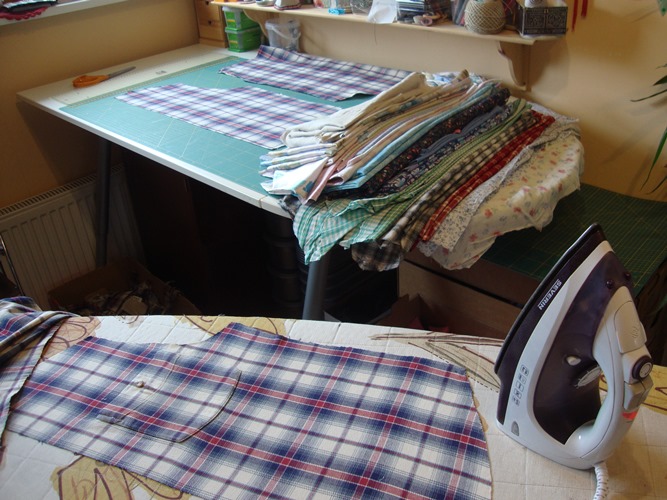
First, of course, washing with gel and drying in the wind, so that pressing is easier. Then pressing the garments and cutting them up. The jumpers, thick sweaters and stretch fabrics (jersey) I set aside for the time being, with the client's agreement. The rest I divided into sets by thickness for three quilts: flannel and checks for one quilt, cotton fabric and flowers for the second, and the thinnest and most fragile fabrics for the third.
The pictures show my initial plan with the fabrics I added.
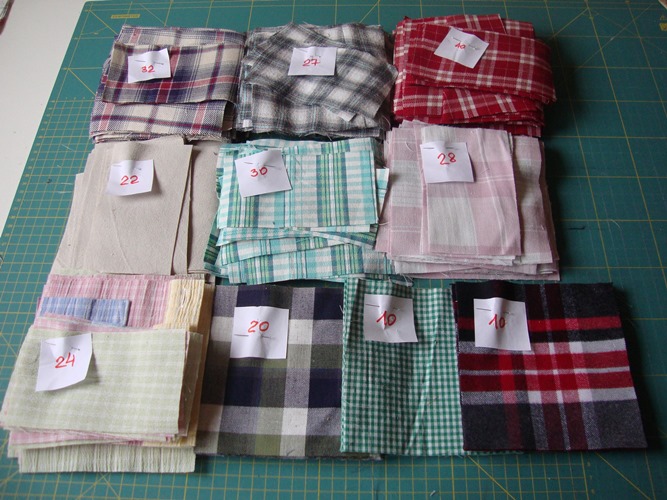
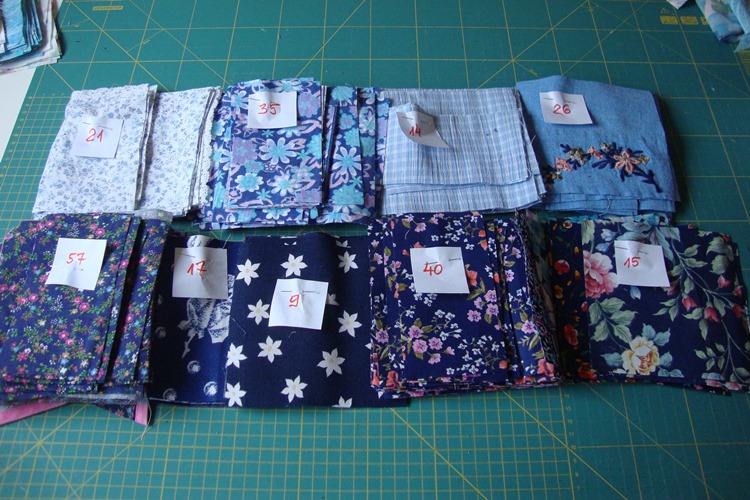
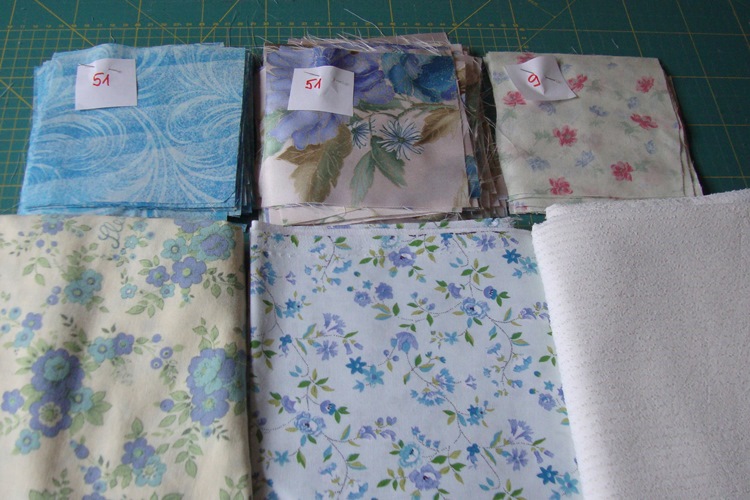
The client asked, though, that I use all the materials sent to me and add something of my own only in case of absolute necessity.
So that the knits would not stretch or start to fray, I sewed every square onto a white fabric square on all four sides. So that the thin fabrics would not tear between the others and start letting the wadding through, the same had to be done with those. The silk squares, which fray easily, I also sewed onto a cotton fabric square.
So for one quilt I had to make not 234 squares but close to 350.
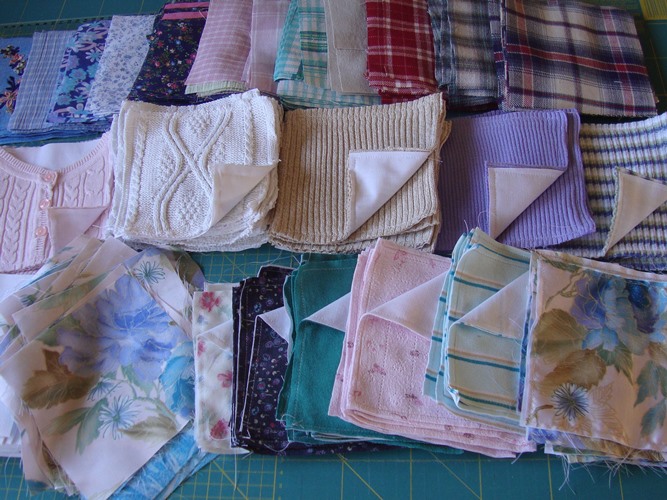
It was a new experience for me that the effect of a pattern comes not only from the different colours and the pattern itself but that combining extremely different materials and fabric structures with one another also gives a very interesting result.
For the quilt to look neat and pretty despite the use, side by side, of materials of endlessly different thicknesses and of stretchy and brittle ones too, all that was needed was more effort.
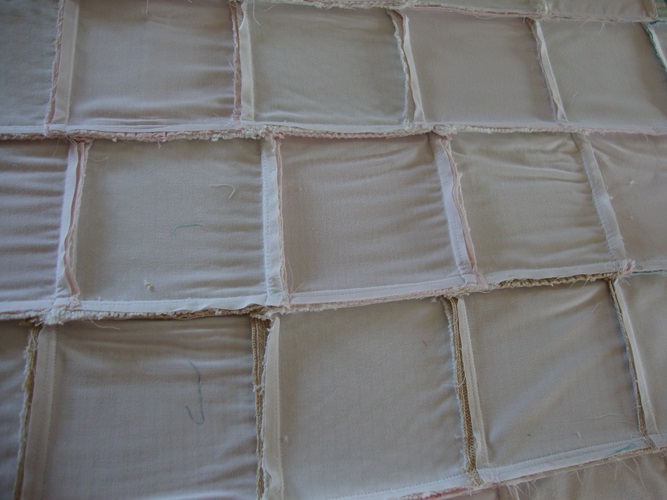
I pressed the seams down as always: on every other row the seams to the left, on every other to the right. The seams are very thick in places and I gave those plenty of steam. Especially in the final phase, with the whole quilt together. Here is a picture of the back of the quilt as well. There you can see how the seams have been pressed down.
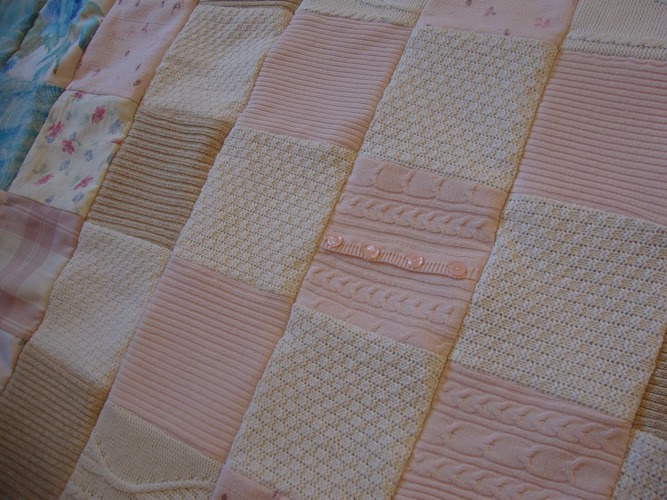
The fact that the middle squares are lighter and the transition towards the edges darker is the client's idea. My job was to sort all the squares into equal stacks and lay them out into the pattern.
At the same time I placed the thicker materials in the middle and the thinner ones towards the edges.
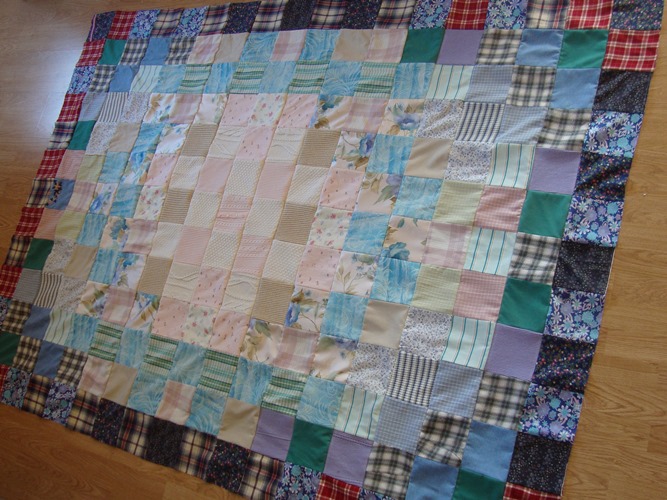
Under this go thin wadding and a backing. Since the client wanted identical quilts, I am adding pictures of one only. More pictures of the finished quilt on the portfolio page.