Photographs: Silvia Luts
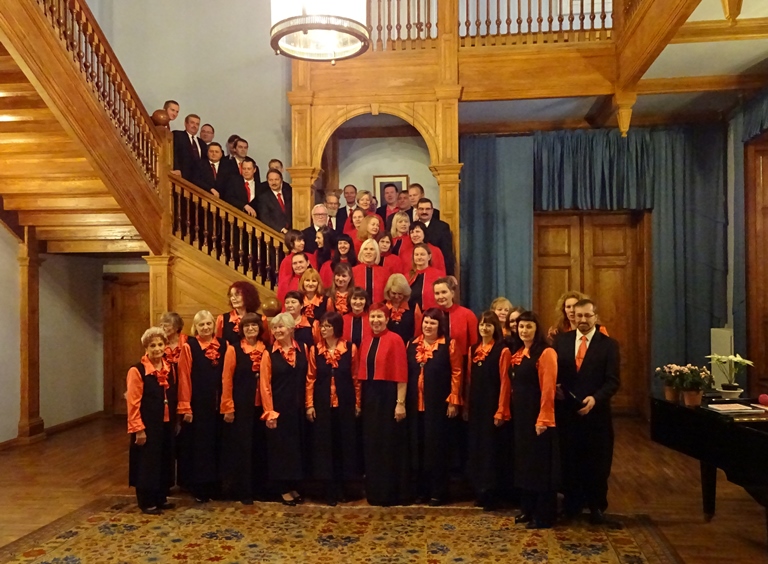
The latest trip by our choir, the mixed choir of the Raudtee Culture Society, was so splendid and so full of positive feeling that I have to share it with you.
All our choir's events are of course very splendid. But there are too many to cover them all. I would so like to: I take pictures and gather material, but there it stays. I simply cannot see where to pinch those hours from.
Take last summer's concert trip to Italy, for instance. A whole book could be written about it. 🙂 There are several hundred pictures; processing them alone took a week's worth of night hours. I have not even got as far as writing the text.
Every season, together with our brother the brass band, we give some twenty concerts around Estonia; we took part in the song festival, of course, and before that we went to an international choir festival in Italy, and this summer we go on a concert trip to the Aland Islands. In a few days' time we take part in the XX Estonian mixed choir singing competition Tuljak. And in 2016 we host the XV International FISAIC choir festival.
But this time, the Olustvere concert.
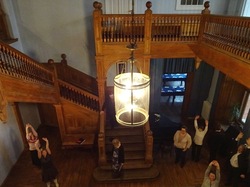
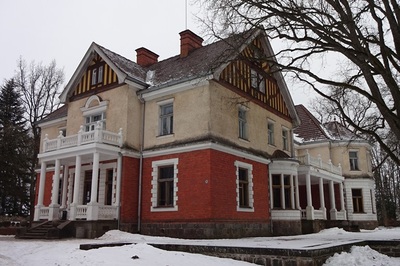
At Olustvere manor we were received in the guest room of the main building with hot coffee and home baked biscuits. The sunny room with a view over the manor park and a historic fireplace was the guest room for the count's family in its day too. In such pleasant surroundings we were told the story of how the manor came about, its history and its family of counts.
The building was wonderful, preserved quite authentically. A great deal of wood made the rooms warm and cosy. Even the original window glass had survived, at least in the guest room. Its rippling surface confirmed that this is handmade glass.
The historic fireplace and the chandelier were original too, the latter visible in the picture on the left. Do not let yourself be distracted by the singers doing their exercises as they prepare to perform. 🙂
It was all so exciting and a little mystical too, the building full of the breath of history and of nostalgia. At times it felt as though I had found myself a couple of hundred years back in time. At any moment the count's children would come running out of the nursery or the countess would come to receive her guests.
At exhibitions I am not a very diligent reader of the display boards, but the local guide's account of the family of counts who once lived here made me want to hear and see more.
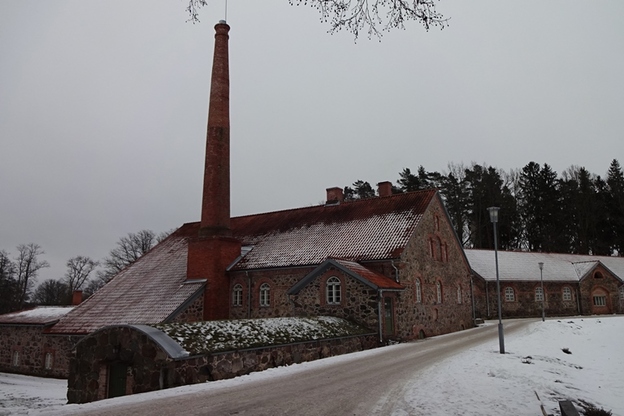
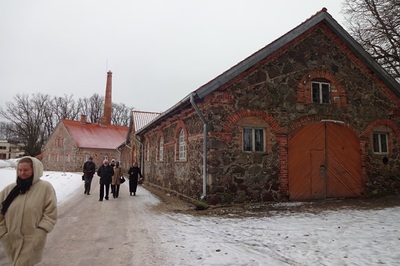
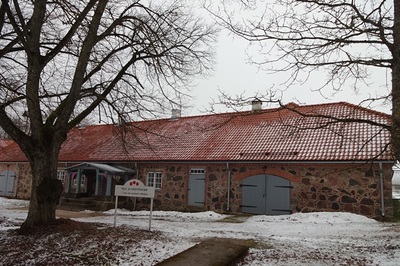
The tour of the manor was an experience in itself. What a magnificent complex of buildings.
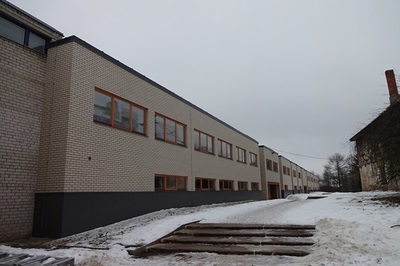
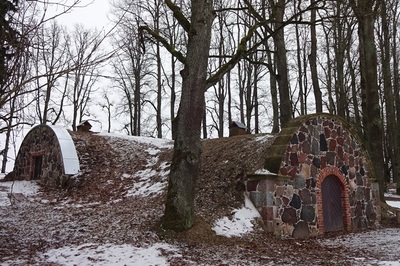
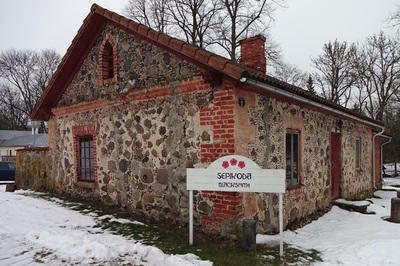
In the main building, completed in 1903, an electricity network, a telephone, running water and other conveniences of the time had already been installed. The building originally had 33 buildings belonging to it, and today 29 of them survive or have been renovated. Besides the main building the complex includes the old manor house, the steward's house, the servants' house, the workers' house (smiths and craftsmen), stables for horses and oxen, the stable for the count's carriage horses (today a student hostel and sports building), byres, a dairy, a craftsman's house, a distillery, a smithy, a well pavilion, a spring pavilion, cellars and the gardener's house.
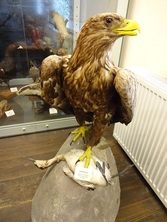
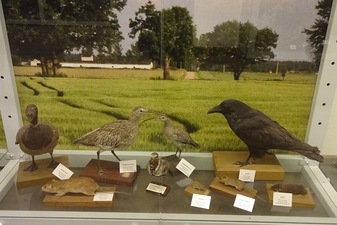
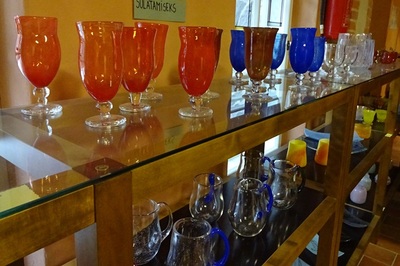
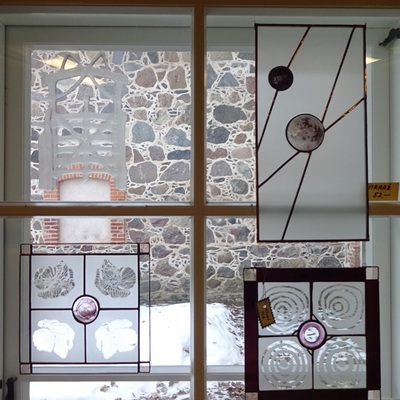
Today a large part of the buildings have been renovated and house a ceramics and glass workshop, a smithy, a wool and craft workshop, a patchwork and linen workshop and so on. We visited the glass and ceramics workshop set up in the former distillery and the exhibitions there, and in the outbuildings the fantastic exhibition of miniature wooden horses (the work of Voldemar Luht) and the exhibition of taxidermy (set up by Ilmar Tilga).
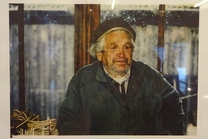
Voldemar Tilga's exhibition of miniature wooden horses was quite extraordinary for me.
Voldemar Tilga had graduated from the Vodja Agricultural School and studied at the Olustvere Agricultural School, worked at the Olustvere Agricultural Technical College as senior agronomist and at the Estonian State Stallion Stables in Viljandi county and on Saaremaa. Later, when the Estonian State Horse Breeding Station was founded, he worked there as senior zootechnician until he retired. He was known as a fine judge and trainer of horses of various breeds. He captured horses on paper, in wax, in stone, in clay, in plaster and in wood.
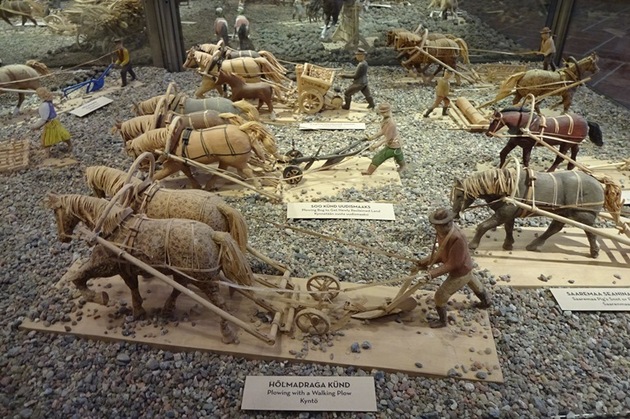
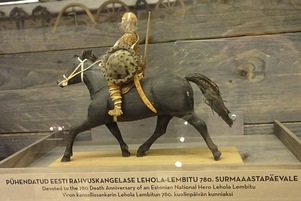
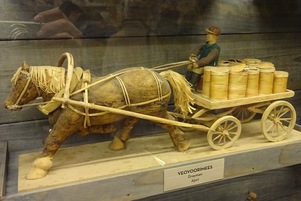
The exhibition of miniature wooden horses set up in the stable building was astonishing. It contained horses carved from wood with various farming implements, with people and in every possible activity involving horses, from ploughing, harrowing, sowing and carting hay to weddings, fairs and tram rides.
From the display board you could read that Voldemar Tilga took up the wood carving seen at the exhibition after retiring, when he decided to record the work once done with horses. He cut from wood and assembled 450 horses with people, harness, carts, sledges, farm machinery, tools and other equipment that characterises the use of horses as people's helpers. He has also managed to bring out, among other things, the mood of the horses at their work: light footed carriage horses at a gallop, work horses of melancholy temperament, or heavy draught horses worn out by hard labour.
What a wonderful contribution by one man to the generations to come, a message about the everyday and festive days of our ancestors.
I have had the same unfading feeling before, visiting old manors and places of cultural heritage. When I was still in the role of an employee, I regularly took part in study trips for Harju county's cultural workers (thank you, Riin Kivinurm and her team), on which we visited, one after another, probably every institution connected with culture in the county. A very enriching and memorable undertaking, on which we took turns to be the hosts for our own parish and to introduce its institutions, and on later occasions to be guests and visitors for the others. This year I really should get myself moving and take part in the visiting game Forgotten Manors.
But back to thinking about Olustvere.
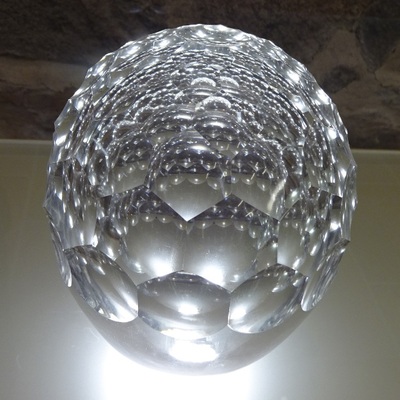
The ceramics and glass workshops made me want to stay there for good, to take a lump of clay and make something, or to try my hand in the glass workshop. What spacious rooms, what a choice of tools and raw material, pieces waiting to be fired and glazed drying on the shelf. Lumps of clay right there waiting to be cut open.
By the way, in the glass workshop they sell pieces of coloured glass by the kilo, as production waste. Since a workshop on making glass jewellery is coming up at my local village centre, I bought myself 2 little bags of glass pieces to take home. 🙂 A strange person, am I not. But when you collect coloured glass as bottles, what you get is mostly brown and green, not orange, yellow, blue and so on.
The joint concert with our hosts, the Lehola mixed choir, was very enjoyable too. The hall was pretty, cosy and with good acoustics. The joint songs sounded wonderful and we agreed to meet again. By taking part in the Olustvere manor days this summer, for instance.
Many thanks to the Lehola mixed choir for the warm, heartfelt and memorable welcome and the splendid joint concert. Many thanks to our conductor Aivar Lestsinski, assistant conductor Mariell Aren and choir leaders Ulle Vunk and Lilly Ammon.